Most organisations invest in training to build capability, reduce risk and improve performance.
But does your organisation have a learning journey, or just a list of training programs?
The issue usually starts with good intentions. WHS engages a safety program to respond to risk. HR organises psychosocial safety training to address workplace wellbeing concerns. L&D sources leadership training to close a capability gap. Operations brings in practical training to respond to pressure on the ground.
Each team is trying to solve a real problem, and each program may be useful on its own. The problem starts when connected issues are addressed separately and training is brought into an organisation in pieces.
Without alignment, the workforce can receive different messages about the same workplace expectations. Over time, the organisation can end up with a patchwork of training instead of a clear, connected approach to building capability. If the learning message is fragmented, people notice.
When training programs do not connect
Disconnected training creates practical problems across the organisation, including:
- Duplicate content
- Inconsistent messaging between departments
- Add to learner fatigue
- Reinforce silos
- Minimises a shared approach to problem solving.
Organisations may also miss valuable opportunities when learning programs are developed in isolation which include:
- Reinforcing consistent messages and language
- Connecting safety, leadership and workplace behaviours as a journey
- Creating clear career development paths
- Effective use of training budgets
- Encouraging collaboration and knowledge sharing
- Clearly communicating company wide policies, operational standards or compliance.
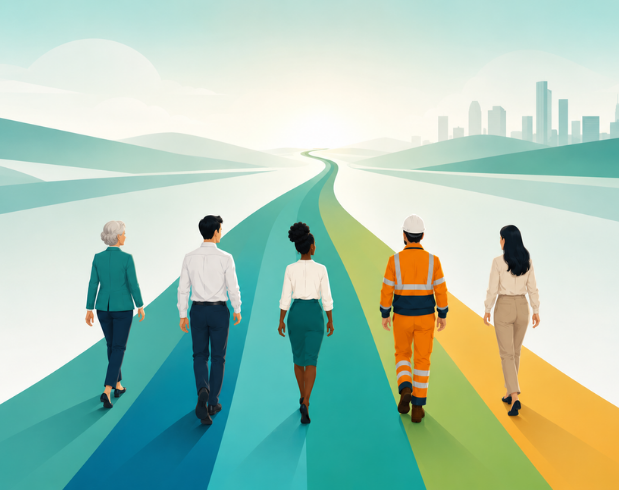
A cohesive learning journey connects each program to the next, so people understand what is expected, why it matters and how to act. It gives leaders, frontline workers and support teams shared language, clear expectations and practical behaviours to apply at work.
You do not need one supplier, but you do need one message
Not every program needs to come from the same training provider. Many organisations use several specialist providers or design programs in-house. The key is whether each program supports the same broader strategy.
How to take a whole-of-organisation approach to learning
Before investing in another program, organisations should bring together the people responsible for learning, safety, leadership and workforce development to review the current learning landscape and ask:
- What capability are we trying to build?
- What programs already exist?
- Where are the gaps?
- Where are we repeating content or messages?
- Do programs use consistent language?
- Do programs build on each other, or sit separately?
- What learning is needed at each role or level?
- Who needs to be involved in designing, approving and reinforcing the learning?

From there, organisations can create a learning journey map that shows how capability builds across the workforce to give decision-makers a clear reference point before new training is created or purchased.
The benefits of this approach are practical and cultural. Messages stay consistent across departments, silos begin to break down and capability gaps are easier to identify. Training spend is used more effectively, content isn’t duplicated and people’s time is protected. Most importantly, learning is more likely to stick because each program reinforces the same expectations in practical, role-relevant ways.
New training should not be added without checking the learning journey map first to ensure it fills a genuine gap, reinforces existing messages or builds the next layer of capability.
These questions shift the focus from “What training do we need?” to “What capability are we building, and what learning journey will get us there?”
The aim is learning that changes everyday decisions, conversations and actions.