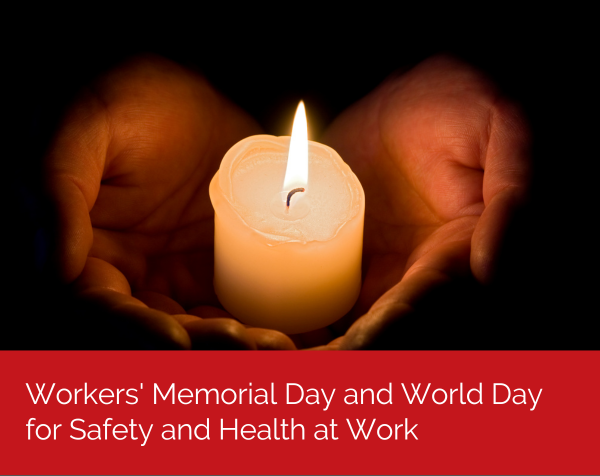
On 28 April each year, International Workers’ Memorial Day is observed across Australia and around the world. It is also World Day for Safety and Health at Work.
International Workers’ Memorial Day brings together remembrance and action. It asks organisations to reflect, then act on what needs to change.
Held on 28 April each year, the day honours those who have died as a result of workplace injury, illness, or disease and is also a time to renew our commitment to preventing further harm.
For many families, friends, and colleagues, this day carries ongoing grief. For workplaces, it is a clear reminder that most incidents are preventable when risks are understood, managed, and acted on.
Data from Safe Work Australia shows that around 200 people lose their lives each year due to workplace incidents, with many more deaths linked to work-related disease. Behind every number is a person, a family, workmates, and a community.
Across Australia, memorial ceremonies are held in major cities and regional areas. To mark the day, consider attending a Workers’ Memorial Day service or event in your state or territory, or take time with your team to reflect on the risks that still exist in your work. The National Workers Memorial also stands as a permanent tribute.
The same day also marks World Day for Safety and Health at Work. In 2026, the International Labour Organization’s focus is on healthy psychosocial working environments.
Psychosocial hazards include high job demands, low control, poor support, and exposure to difficult or traumatic situations. These conditions can affect both mental and physical health, and increase the likelihood of incidents.
This focus aligns with the Australian Work Health and Safety Strategy 2023 to 2033, which identifies psychosocial health as a national priority.
For leaders, the question is direct:
Where are people under strain in our work, and what are we doing about it?
This means:
- Looking at how work is actually done, not just how it is planned
- Identifying pressure points early
- Encouraging people to speak up
- Acting on risks before they lead to harm
Use the day as a reminder that managing risk, including psychosocial risk, is part of everyday work, not a one-off activity.