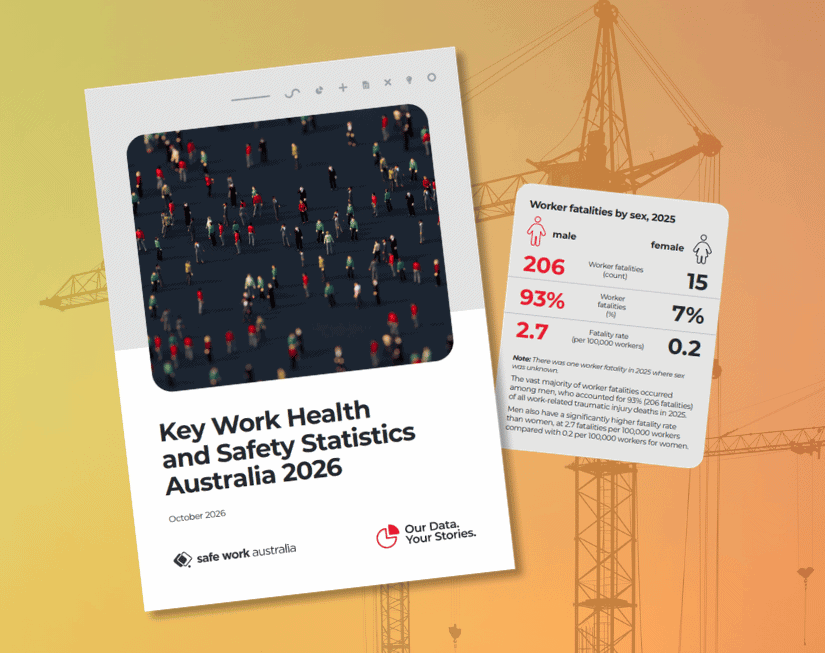
Safe Work Australia’s Key Work Health and Safety Statistics is a snapshot of WHS in Australia, analysing national safety data on work-related fatalities, injuries, and diseases.
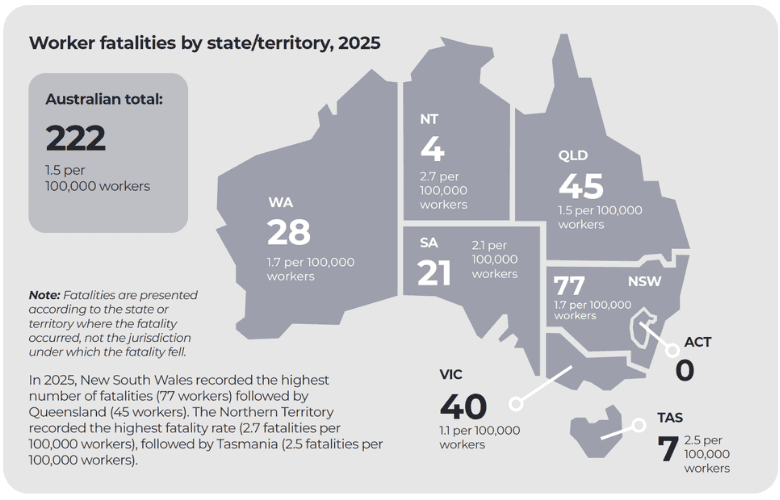
222 workers lost their lives to traumatic workplace injuries in 2025, the highest annual number since 2012. Australia also recorded approximately 147,200 serious workers’ compensation claims in 2024–25.
For safety leaders and executives, the report provides a starting point for reviewing priorities. Where does serious harm occur? Which workers face greater risks? And are your organisation’s controls addressing the hazards most likely to cause lasting harm?
Here are some key findings to take back to your workplace.
Work-related fatalities and injuries
In 2025, 222 workers died from traumatic injuries sustained while working, above the five-year average of 197.
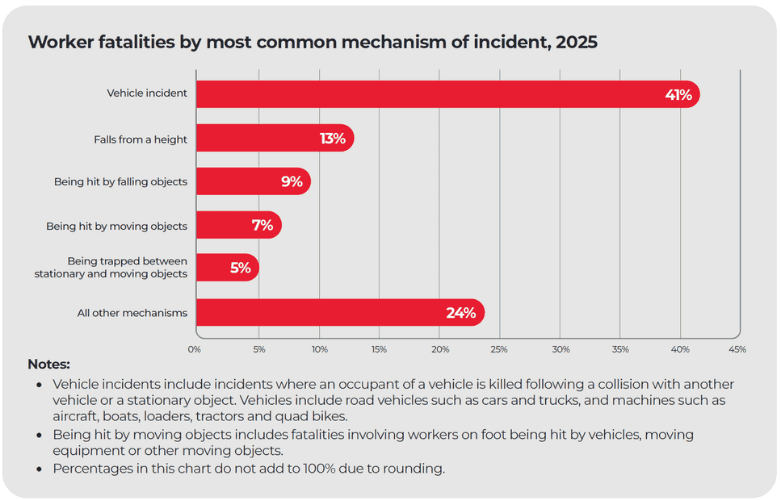
The fatality rate was 1.5 deaths per 100,000 workers, compared with the five-year average of 1.4. Vehicle incidents accounted for 41% of fatalities, followed by falls from a height (13%) and being hit by falling objects (9%).
Older workers experienced higher fatality rates
Workers aged 45 and over accounted for 62% of worker fatalities.
- Workers aged 65 and over recorded the highest fatality rate, at 5.5 deaths per 100,000 workers, more than three times the overall rate.
- Workers aged 55 and over also experienced higher serious claims frequency rates than the average across other age groups.
Three industries accounted for almost two-thirds of worker deaths
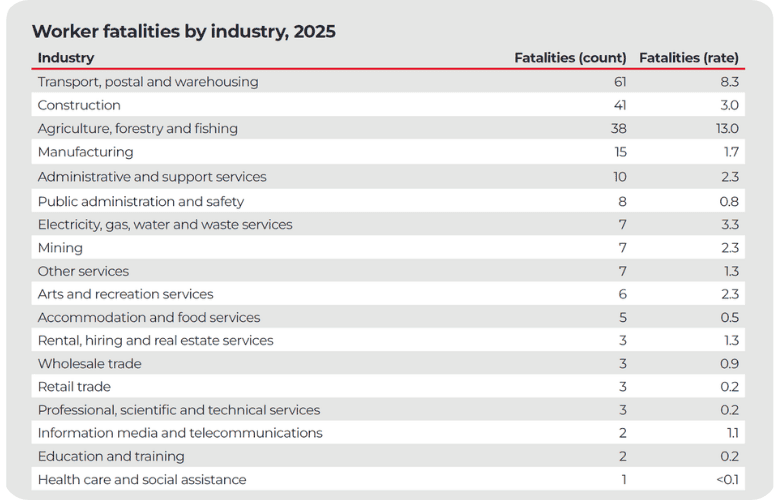
In 2025, 63% of worker fatalities occurred in:
- Transport, postal and warehousing: 61 deaths.
- Construction: 41 deaths.
- Agriculture, forestry and fishing: 38 deaths.
These figures show the number of deaths in each industry. Fatality rates account for workforce size and help compare risk between industries.
Serious claims highlight the everyday sources of harm
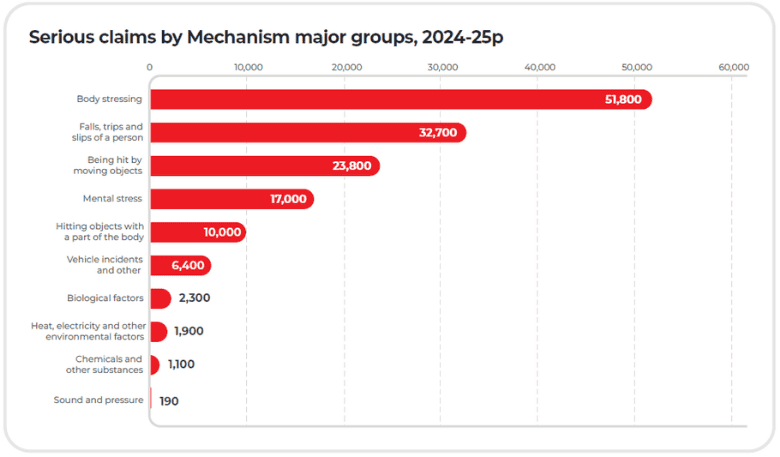
Preliminary data show approximately 147,200 serious workers’ compensation claims in 2024–25, equivalent to more than 400 claims a day. Serious claims involve at least one week away from work.
Four mechanisms accounted for 85% of serious claims:
- Body stressing.
- Falls, slips and trips.
- Being hit by moving objects.
- Mental stress.
Health care and social assistance recorded the largest number of serious claims, approximately 30,700, or 20.8% of the total.
Mental health claims have grown substantially over the decade
Mental health conditions accounted for approximately 17,900 serious claims in 2024–25, or 12.2% of all serious claims.
Although the number fell slightly compared with the previous year, it increased by 169.4% over the decade.
The consequences can be substantial. In 2023–24, serious mental health condition claims had:
- A median time lost of 34.8 working weeks.
- Median compensation paid of $68,600.
What should your organisation do next?
Use the national findings to examine:
- Where could a fatal or life-changing incident occur in our workplace?
- Are our controls effective in practice, and how do we know?
- What are workers saying about physical and psychosocial hazards?
- Do leaders at all levels have the skills and authority to act on those concerns?
We encourage leaders and managers to read the full report and explore the data relevant to their industry, occupations and workforce.
Source: Safe Work Australia, Key Work Health and Safety Statistics Australia 2026.
Fatality figures relate to 2025; serious claims figures are preliminary data for 2024/25. https://data.safeworkaustralia.gov.au/insights/key-whs-statistics-australia/latest-release
For interactive data from Safe Work Australia visit: https://data.safeworkaustralia.gov.au
Build your team’s safety leadership capability
Help your leaders and supervisors recognise risks, hold effective safety conversations and support safer ways of working.
Safety Dimensions offers practical safety training and leadership development tailored to your organisation.
Talk to us about your team’s development needs. Call 03 9510 0477 or contact us below.